Contents
Your sales reps are losing deals they should be winning. Not because they lack talent, but because they lack the right content, coaching, and data at the right moment.
That is exactly the gap that sales enablement tools are built to close.
With the rise of AI sales enablement tools and an increasingly crowded sales tech landscape in 2026, choosing the wrong platform doesn’t just waste budget, it costs you pipeline, productivity, and competitive advantage.
We spent three months evaluating 27 of the best sales enablement tools, analyzing real user reviews, testing features, and benchmarking what top-performing B2B sales teams actually use.
This guide gives you everything you need to choose the right sales enablement tool for your team.
What Are Sales Enablement Tools?
Sales enablement tools are software platforms designed to equip sales teams with the content, training, coaching, and analytics they need to close deals more effectively.
In practice, modern digital sales enablement tools act as a centralized system where:
Reps can instantly find the right content for any deal
Managers can coach using real sales conversations
Leaders can track which activities actually drive revenue
These platforms sit at the intersection of marketing, sales, and revenue operations, making them essential B2B sales enablement tools for scaling teams.
Core Capabilities of Sales Enablement Tools
Most top sales enablement tools include:
Content management - organize and surface the right assets
Sales coaching & training - onboarding, call intelligence, and skill development
Buyer engagement tracking - see how prospects interact with content
Analytics & reporting - tie activity directly to revenue outcomes
CRM integrations - sync with platforms like Salesforce and HubSpot
Key Sales Enablement Statistics for 2026
The data below comes from a combination of our own analysis of 500+ G2 and Gartner reviews, alongside published industry research.
58% more likely to exceed quota when using enablement content (Salesforce, 2025)
48% jump in sales enablement tool adoption in 2024 vs 2023 (Forrester)
65% of buyer interactions now happen digitally before first sales contact (Gartner)
2.5x revenue growth for companies with mature enablement programs vs those without
32% reduction in ramp time for new reps using structured enablement platforms
We analyzed 500 reviews of the top sales enablement platforms on G2 and Gartner Peer Insights. The single most-cited benefit was 'faster rep onboarding' (mentioned in 71% of positive reviews), followed by 'better content discoverability' (64%) and 'improved coaching consistency' (58%).
How to Choose a Sales Enablement Tool: The CART Framework
With 10 tools in this guide alone, choosing without a framework is how teams end up paying for the wrong platform for two years. We built the CART Framework to cut through the noise.
Step 1 — Content (C)
Ask: Can reps find the right asset within 30 seconds? Does the tool tag and surface content by deal stage, industry, and persona? Can marketing see which assets get used and which get ignored? If the answer to any of these is no, the content module is weak.
Step 2 — Analytics (A)
Ask: Does the platform connect content engagement to deal outcomes? Can you see that deals where reps shared the competitor battle card closed at a 34% higher rate? Revenue correlation, not just view counts, is the gold standard.
Step 3 — Readiness (R)
Ask: Does the tool include structured onboarding paths, certification, and ongoing coaching? Does it record and analyze sales calls? Can managers give async feedback on a rep's demo? Training built into the same platform as content is a significant multiplier.
Step 4 — Tech Stack Integration (T)
Ask: Does it connect natively with your CRM (Salesforce, HubSpot)? Does it integrate with your email client, Slack, Zoom, and Gong? A tool that lives outside your existing workflow will be ignored within 60 days.
Top 10 Best Sales Enablement Tools in 2026
Category 1: Enterprise Sales Enablement Platforms
These are full-suite B2B sales enablement tools designed for large organizations.
1. Highspot
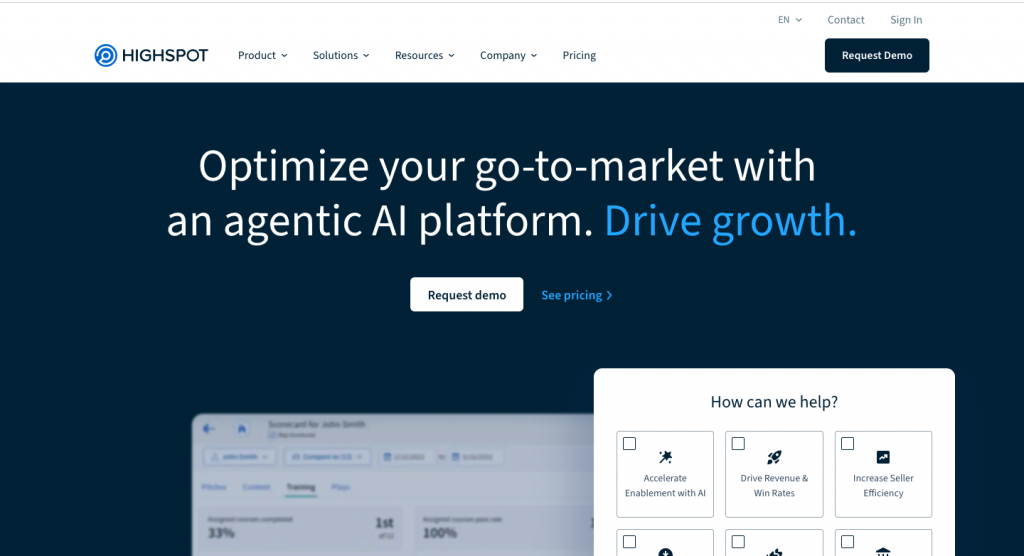
Highspot is consistently ranked as the market leader in sales enablement, and it earns that position through an exceptional combination of content management, analytics, and CRM integration. The platform's AI-powered content recommendations surface the right asset to a rep based on deal stage, industry, and buyer persona — without the rep having to search. Its analytics engine goes beyond view counts to show which content correlates with won deals, giving revenue leaders genuinely actionable data.
Best for: Enterprise B2B sales teams (100+ reps) using Salesforce or Microsoft Dynamics.
Pros:
Best-in-class content intelligence and recommendations
Deep Salesforce integration with bidirectional data sync
Robust buyer engagement tracking, know when prospects view your deck
Strong training module with guided selling paths
Excellent search functionality across all content types
Cons:
Pricing is opaque and enterprise-level (budget $600–$1,200+/month for small teams)
Implementation can take 6–12 weeks for full rollout
Steeper learning curve than lighter-weight tools
Reporting customization requires admin expertise
Pricing: Custom enterprise pricing. Most small-to-mid teams report $600–$800/month. Annual contract required.
Our Verdict: Highspot is our top pick for enterprise teams that need the full package. If you are running 50+ reps and need content, coaching, and analytics under one roof, this is your platform.
2. Seismic
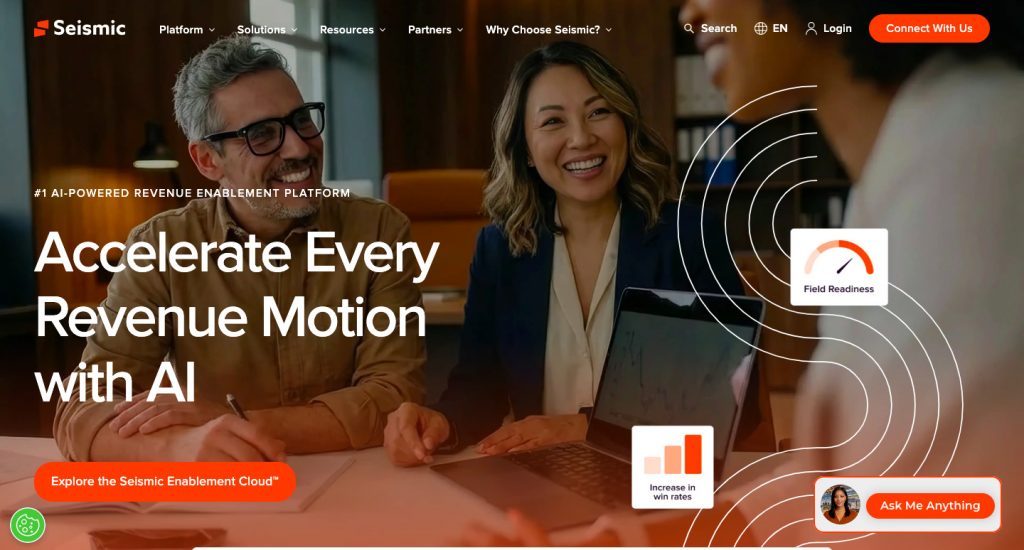
Seismic competes head-to-head with Highspot for enterprise dominance, and its differentiation lies in content personalization and automation. The LiveSend feature lets reps create hyper-personalized content experiences for individual buyers, while the WorkSpace module enables collaborative deal rooms shared between reps and prospects. Seismic's content governance tools are also exceptional, marketing can lock templates while still giving reps flexibility to customize within guardrails.
Best for: Large enterprise organizations (250+ reps) with complex content governance needs.
Pros:
Outstanding content personalization and templating engine
LiveSend buyer engagement rooms are best in class
Strong governance, marketing controls what reps can and cannot change
Excellent predictive content scoring
Global support and enterprise SLA guarantees
Cons:
Fully custom pricing with no public rates — budget 6+ months for procurement
Heavy implementation lift, often requires dedicated CSM
Can feel over-engineered for teams under 200 reps
Mobile experience lags behind desktop
Pricing: Custom enterprise only. Industry reports suggest $40,000–$200,000+ annual contracts depending on seat count.
Our Verdict: Seismic is a powerhouse for teams where content personalization at scale is a core GTM motion. If your reps send hundreds of custom decks per month, Seismic pays for itself.
3. Mindtickle
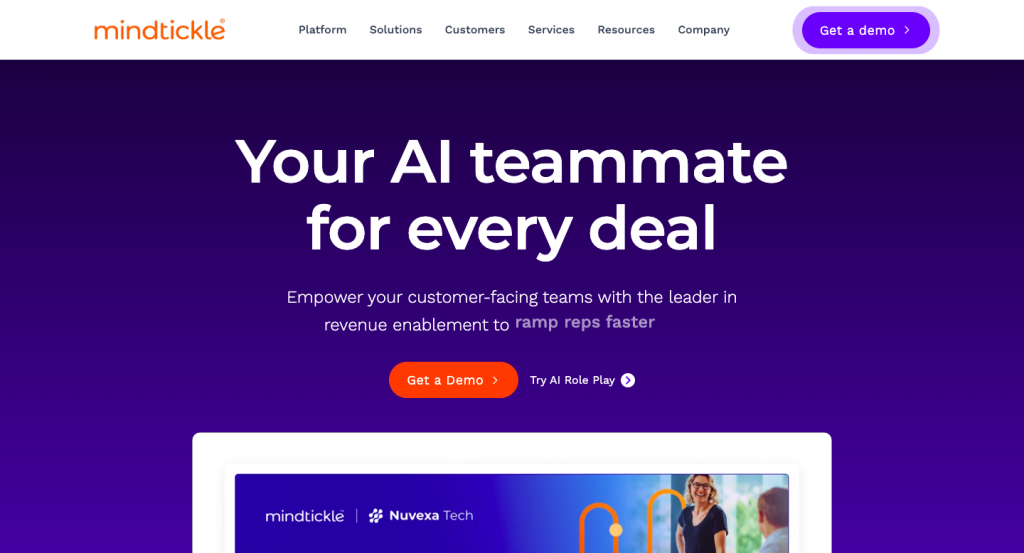
Mindtickle takes a readiness-first approach that sets it apart from content-first platforms like Highspot and Seismic. Its core strength is helping managers build, track, and continuously improve rep skills through structured programs, video coaching, role-play exercises, and AI-powered call analysis. The platform's Mission feature lets managers assign specific selling scenarios and score rep responses against benchmarks — a genuinely powerful coaching mechanic. Content management is solid but secondary to the readiness engine.
Best for: Sales organizations where coaching consistency and rep development is the top priority.
Pros:
Best-in-class coaching, training, and readiness features
AI call analysis and conversation intelligence built in
Mission-based coaching workflows are highly effective for onboarding
Good integration with Salesforce and Gong
Strong analytics on rep skill gaps and readiness scores
Cons:
Content management is less sophisticated than Highspot or Seismic
UI can feel complex for non-technical admins
Pricing is enterprise-only — no SMB option
Implementation requires significant configuration
Pricing: Custom pricing. Typically quoted on a per-seat, annual basis. Expect similar range to Highspot.
Our Verdict: If rep onboarding time and coaching consistency are your biggest gaps, Mindtickle is the answer. It is the most purpose-built readiness platform in this list.
4. Showpad
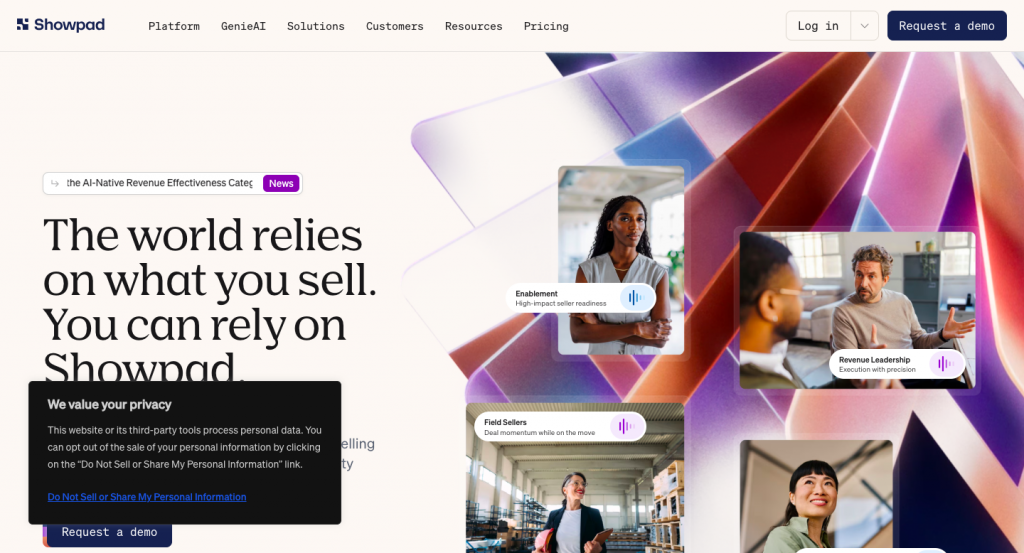
Showpad was built with field sales and retail sales teams in mind — reps who meet buyers in person and need content that works beautifully offline and on tablets. The platform excels at creating interactive, visually polished content experiences. Its Shared Spaces feature (a collaborative deal room) is excellent, and the coaching module is solid. Where Showpad lags slightly is in the depth of analytics and the sophistication of content recommendations compared to Highspot.
Best for: Field sales teams, retail sales, pharmaceutical reps, and organizations with heavy in-person sales motions.
Pros:
Exceptional offline content access — works without internet on iPad and mobile
Beautiful, consumer-grade content presentation interface
Strong Shared Spaces for buyer collaboration
Good integration with Salesforce, Microsoft, and Veeva
Solid training and coaching capabilities
Cons:
Content analytics less sophisticated than Highspot or Seismic
AI recommendations not as mature as top competitors
Can be expensive for pure inside sales teams who will not use offline features
Reporting customization has limitations
Pricing: Custom pricing. Generally comparable to Highspot. Free demo available.
Our Verdict: Showpad is the clear winner for field sales and pharma. If your reps are in front of buyers without reliable internet, it is in a category of its own.
Category 2: Revenue & Conversation Intelligence Tools
These are modern AI sales enablement tools focused on coaching and deal intelligence.
5. Gong
Gong invented the revenue intelligence category and remains its dominant player. At its core, Gong records and transcribes every sales call, email, and meeting, then uses AI to surface insights — which topics cause deals to stall, which talk tracks correlate with wins, which reps are struggling and why. The coaching features are exceptional: managers can review clips, leave timestamped comments, and build coaching playlists from real call moments. Content management is a secondary feature, but Gong Engage covers basic sales engagement workflows.
Best for: Mid-market to enterprise revenue teams that want call intelligence and coaching as their primary enablement layer.
Pros:
Industry-leading conversation intelligence and deal analytics
Exceptional manager coaching tools with clip libraries
AI-generated call summaries and next steps save reps hours per week
Deep CRM integration pushes call data directly into opportunities
Proven ROI — most teams see measurable win-rate improvement within 90 days
Cons:
Content management is limited — not a replacement for Highspot or Seismic
Pricing is among the highest in this list ($1,600+/month for small teams)
Initial call recording setup requires IT involvement
Some reps resist call recording — change management needed
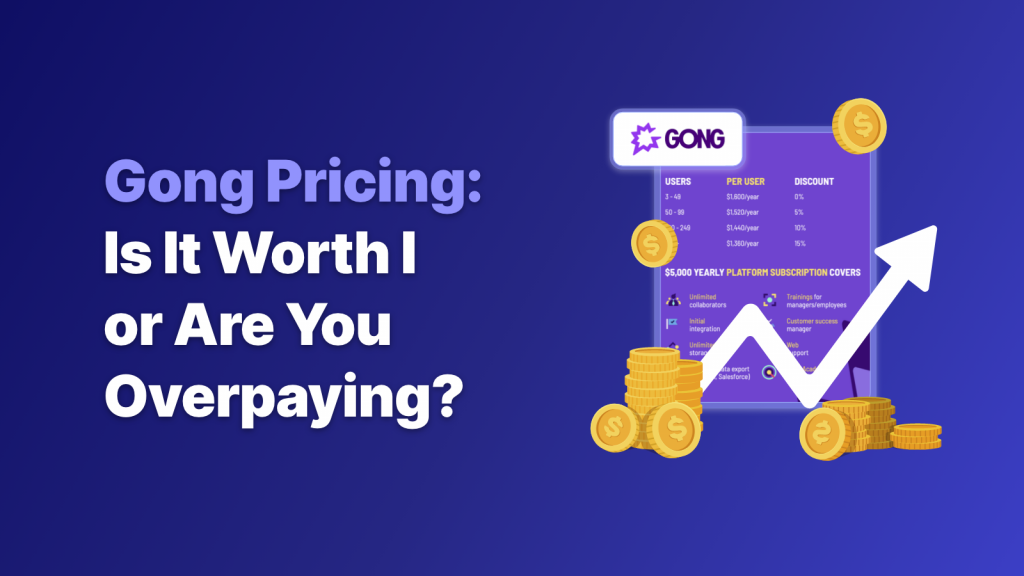
Pricing: Starts around $1,600/month for small teams. Enterprise pricing is significantly higher. Annual contract.
Our Verdict: Gong is essential for any team that wants to coach from reality, not instinct. Pair it with a content platform for full coverage.
6. Salesman AI
Salesman AI is an AI-native conversation intelligence platform built specifically around sales coaching workflows. Unlike broader platforms that added AI as a layer, Salesman AI is built from the ground up to analyze sales conversations and deliver actionable coaching feedback. The platform uses advanced AI to score calls against custom playbooks, identify objection-handling gaps, and provide reps with immediate post-call coaching recommendations — without waiting for a manager to review the recording. Its strength lies in automating the coaching loop: reps get consistent, objective feedback at scale that would otherwise require significant manager time.
Best for: Sales teams looking for scalable AI-driven coaching without heavy manager bandwidth, particularly effective for fast-growing teams needing consistent rep development.
Pros:
AI-native architecture delivers more nuanced conversation analysis than retrofitted tools
Automated post-call coaching reduces dependency on manager availability
Custom playbook scoring allows teams to reinforce their specific sales methodology
Objection and sentiment analysis helps identify deal risk early
Faster time-to-insight compared to traditional call review workflows
Cons:
Narrower feature breadth than all-in-one platforms like Gong — focused on coaching, not pipeline forecasting
Integration ecosystem is still maturing compared to established players
Best suited as a coaching layer — teams still need a separate content management platform
Smaller customer base means fewer community resources and peer benchmarks
Pricing: Custom pricing. Contact for a demo and quote based on team size.
Our Verdict: Salesman AI is a compelling option for teams that want AI-driven coaching automation without the full enterprise price tag of Gong. Pair it with a content platform for complete coverage.
Category 3: Sales Engagement Platforms
These tools power outreach and execution, often paired with sales enablement tools.
7. Outreach
Outreach is the most widely adopted sales engagement platform in enterprise, and its depth shows. Beyond email sequences and call dialers, Outreach has pushed into revenue intelligence with Kaia (its AI meeting assistant), deal management with Outreach Commit, and enablement with content recommendations inside sequences. The platform is genuinely powerful but requires dedicated admin support to run at full capability.
Best for: High-volume inside sales and SDR teams in mid-market and enterprise organizations.
Pros:
Deep sequence and cadence management with A/B testing
Strong CRM sync — every touch logged automatically in Salesforce
Kaia AI meeting assistant provides live call guidance
Outreach Commit for pipeline forecasting is excellent
Enormous integration library (200+ apps)
Cons:
Complex to administer — plan for a dedicated Outreach admin
Pricing adds up quickly at scale ($100+/user/month)
Onboarding is a multi-week project
Some users report deliverability issues with email sequences
Pricing: Starts around $100/user/month. Minimum seat requirements apply. Annual contract.
Our Verdict: Outreach is the benchmark for sales engagement. If your SDR and AE teams are running high-volume sequences, it is hard to beat.
8. Salesloft
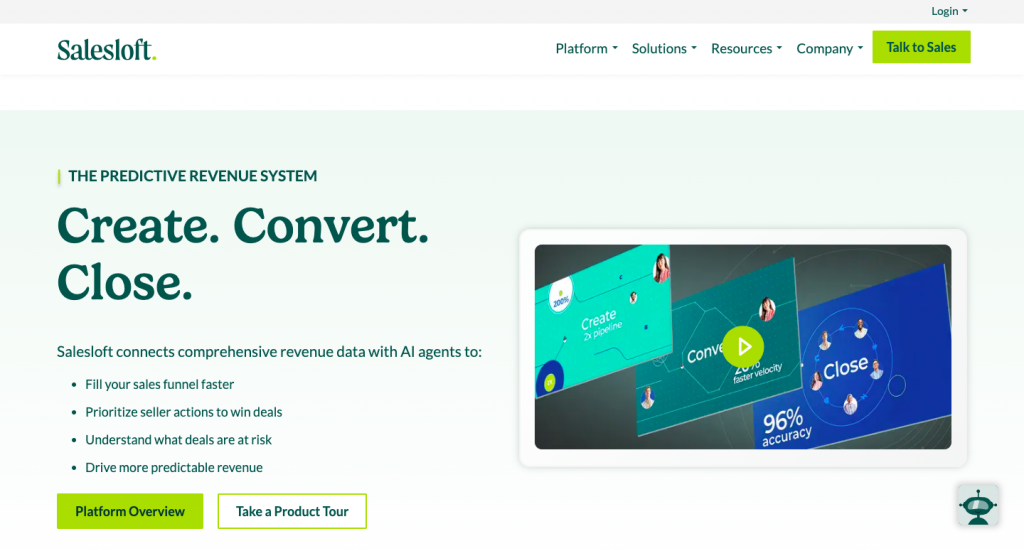
Salesloft competes directly with Outreach and has carved out a strong position by emphasizing coaching and conversation intelligence alongside engagement workflows. The Salesloft Conversations module (call recording and analysis) is now tightly integrated with cadences, so managers can see how specific sequence touches lead to booked meetings and which call techniques correlate with pipeline. For teams that want engagement and coaching in one platform, Salesloft is a compelling choice.
Best for: Sales teams that want engagement automation and conversation coaching tightly integrated.
Pros:
Excellent cadence management with analytics
Conversations (call intelligence) natively integrated — no separate tool needed
Cleaner, more intuitive UI than Outreach for most users
Strong Salesforce integration
Good coaching workflows tied to call recordings
Cons:
Analytics depth is slightly behind Outreach at the enterprise level
Integration library smaller than Outreach
Pricing is comparable to Outreach — not a budget option
Some reporting limitations for complex enterprise orgs
Pricing: Custom pricing. Generally comparable to Outreach. Most teams land $80–$120/user/month.
Our Verdict: If your team wants one platform for engagement and coaching, Salesloft edges out Outreach on usability. It is our recommendation for teams that prioritize rep adoption speed.
9. HubSpot Sales Hub
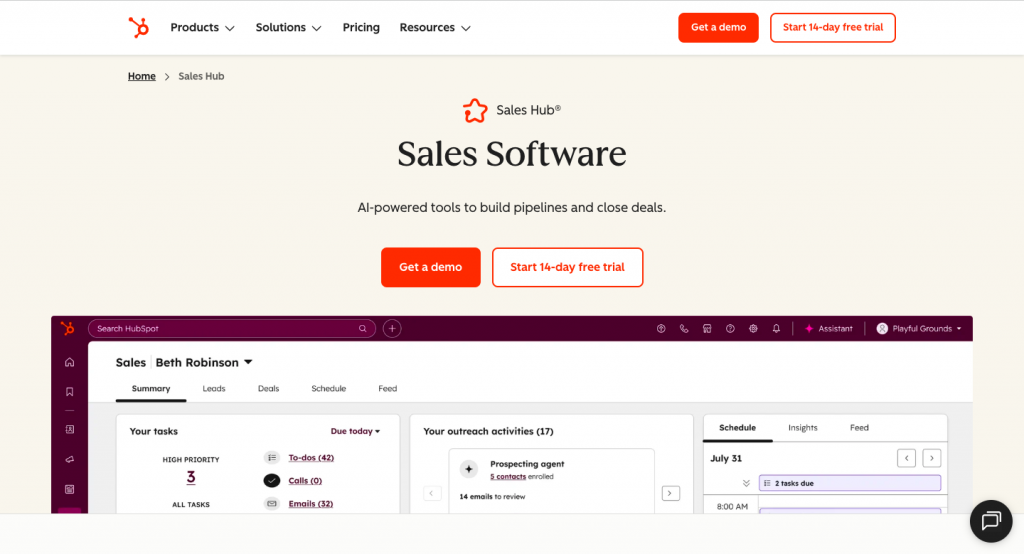
HubSpot Sales Hub is the natural choice for teams already in the HubSpot ecosystem. While it lacks the deep content intelligence of Highspot or the call analytics sophistication of Gong, it covers the core bases of sales engagement, deal management, email tracking, and basic content sharing in a single, well-integrated package. The free tier is genuinely useful, making it the lowest-friction entry point for small sales teams exploring enablement for the first time.
Best for: SMBs and growing sales teams already using HubSpot CRM, particularly those under 20 reps looking for an integrated starting point.
Pros:
Seamlessly integrated with HubSpot CRM — no sync required
Free tier provides real value with email tracking, templates, and deal pipelines
Very fast to set up — teams can be live in hours, not weeks
Intuitive UI with low learning curve for non-technical reps
Scales with paid tiers as team needs grow
Cons:
Content management is basic — not a replacement for Highspot or Seismic
Coaching features are limited compared to dedicated platforms like Mindtickle
Analytics and reporting weaker than enterprise-grade tools
Becomes expensive at scale compared to point solutions
Pricing: Free tier available. Paid plans start at $45/month. Enterprise pricing scales with seat count.
Our Verdict: HubSpot Sales Hub is the right starting point for small teams on HubSpot. It is not a replacement for dedicated enablement platforms, but it covers the fundamentals exceptionally well at a price that is hard to argue with.
Category 4: Sales Learning Management Systems (LMS)
Sales LMS platforms go beyond call coaching and content libraries to provide structured, course-based learning. These tools let enablement teams build and deploy formal training programs, from product knowledge to sales methodology, in scalable, trackable formats.
10. Nano LMS
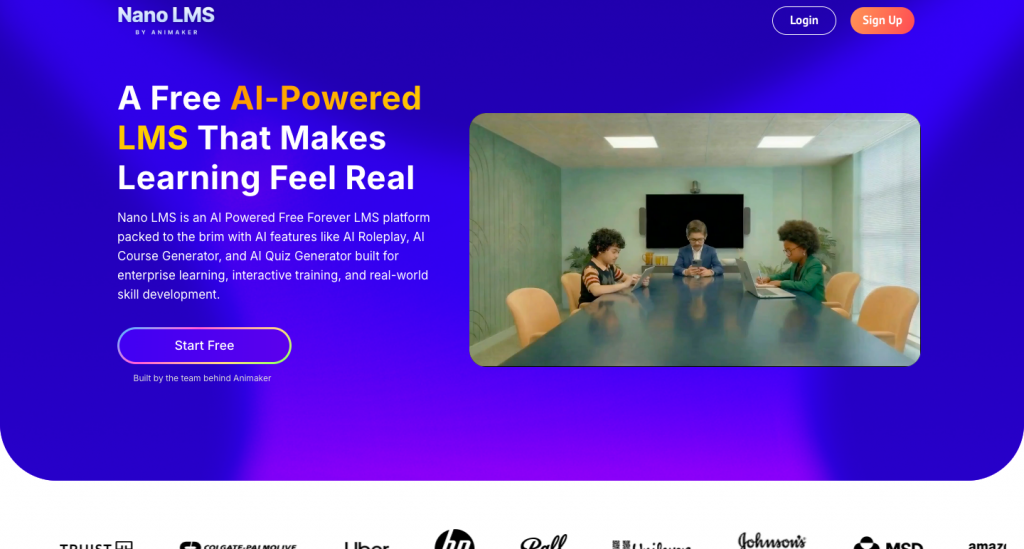
Nano LMS is a flexible learning management system purpose-built for organizational training, with a strong fit for sales teams that need more than just call recording or content libraries.
What sets Nano LMS apart is the breadth of course formats it supports: enablement managers can build training in text, PowerPoint-style slides, and AI-powered roleplay simulations, covering everything from product knowledge certification to objection handling practice.
Once built, courses can be assigned to specific teams or individual learners, making it equally useful for new rep onboarding and ongoing skill development across the full sales org.
Best for: Sales organizations that need structured, course-based training, particularly those running formal onboarding programs, product launch enablement, or methodology certification across distributed teams.
Pros:
Multi-format course creation (text, PPT, AI roleplay) in a single platform — no need for separate authoring tools
AI roleplay simulations give reps unlimited low-stakes practice without manager time
Granular assignment controls let you target the right training to the right team or individual
Structured learning paths improve new rep ramp time significantly
Works equally well for sales, customer success, and other revenue-adjacent teams in the org
Course completion tracking and learner progress dashboards give managers clear visibility
Cons:
Does not replace a dedicated content management platform — course-based training is distinct from deal-time asset discovery
Real-time call intelligence and pipeline analytics are outside the platform's scope
Pricing: Custom pricing based on team size and feature requirements. Contact for a demo.
Our Verdict: Nano LMS fills a genuine gap that most sales enablement platforms leave open: structured, scalable, course-based training that goes beyond call recordings and one-off coaching sessions. For teams serious about building a repeatable sales methodology and cutting rep ramp time, it is a strong addition to the stack, particularly powerful when layered alongside a content platform like Highspot and a conversation intelligence tool like Salesman AI.
Which Sales Enablement Tool Is Right for You?
| Your Situation | Your Best Match |
| Under 20 reps, on HubSpot CRM | HubSpot Sales Hub |
| 20–100 reps, coaching is your #1 gap | Mindtickle or Salesloft |
| 20–100 reps, content discoverability is #1 gap | Highspot or Showpad |
| 100+ reps, need full enterprise suite | Highspot or Seismic |
| Field sales / in-person / pharma | Showpad |
| Call intelligence & coaching from conversations | Salesman AI |
| High-volume SDR/outbound team | Outreach or Salesloft |
| Structured onboarding & course-based training | Nano LMS |
| AI-automated coaching on a budget | Salesman AI |
Conclusion
There is no single best sales enablement tool, there is only the best tool for your team size, tech stack, and biggest gap. Use our CART Framework to score your shortlist. If you are under 50 reps and on HubSpot, start with Sales Hub. If you are over 100 reps and want the full package, Highspot or Seismic are the benchmarks. If coaching is your primary lever, Mindtickle or Gong. If AI-automated coaching is your goal, Salesman AI. If outbound volume is the game, Outreach or Salesloft. And if structured, course-based training is the missing piece, Nano LMS is built exactly for that.
The worst decision you can make is buying the most expensive platform and assuming the tool does the work. Assign an owner, build an adoption plan, and measure from day one. That is what separates teams that get ROI from tools from teams that generate expensive shelfware.
Frequently Asked Questions
What is the difference between a sales enablement tool and a CRM?
A CRM (Customer Relationship Management system like Salesforce or HubSpot) is the system of record for deals, contacts, and pipeline data. A sales enablement tool sits on top of the CRM to give reps the content, training, and coaching they need to work those deals. They serve different functions but are most powerful when deeply integrated with each other.
Do small sales teams need sales enablement tools?
Yes, but the right tool looks different at different scales. Under 10 reps, a combination of Salesman AI and a lightweight LMS like Nano LMS can cover 80% of enablement needs at a fraction of enterprise pricing. The key question is: are reps losing time searching for content, inconsistent in their messaging, or taking too long to ramp? If yes, a lightweight enablement tool pays for itself quickly even for small teams.
Are AI sales enablement tools worth it?
Yes. AI sales enablement tools improve coaching consistency, reduce manager workload, and surface insights faster than manual review.